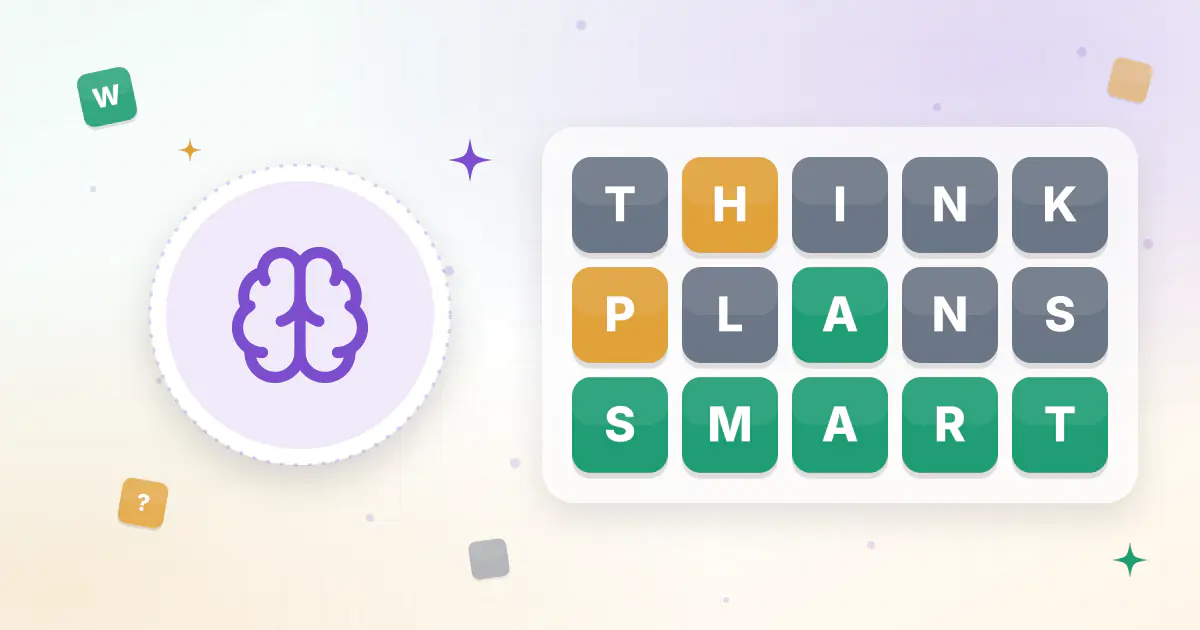
Before you guess
1. Pick one strong opener and stick with it
Using the same good word every day means you slowly learn what its patterns mean. Choose one from our list of best Wordle starting words: five different, common letters in the spots where they usually go.
2. Know which letters are common
E, A, R, O, T, L, I and S cover most answers. Save rare letters like J, Q, X and Z until the common ones are ruled out.
Reading your clues
3. Use every clue, including where yellows aren't
A yellow letter tells you two things. First, the letter is in the word. Second, it's not in that spot. Plenty of players forget the second part, so always move a yellow letter somewhere new.
4. Gray means “no more copies”
Guess a word with two Es and you might see one yellow and one gray. That gray doesn't mean there's no E. It means there's exactly one. Our Wordle Helper handles this for you automatically.
5. Remember double letters
Answers like SPOON, SKILL and EERIE catch people out because we tend to guess five different letters. When your options run thin, think about doubles.
6. Think in word shapes
Endings like -ER, -LY, -CH and -ED, and starts like ST-, SH- and TR- are everywhere. A green E in spot four often means “-ER”. A Y in spot five often means “-LY” or “-TY”.
Choosing your next guess
7. Explore early, commit late
On guesses two and three, a word that tests new letters is often worth more than a word that might be right. Once you're down to two or three options, just go for it.
8. Spot word traps early
Patterns like _ATCH, _IGHT, _OUND and _ASTE have many answers that differ by one letter. Guessing them one at a time can burn all six turns. Instead, play a filler word that tests several first letters at once.
9. Count what's left
Before each guess, try listing the words that still fit. If you can only think of one, check again; there's usually another. The Wordle Helper shows the exact count.
10. Don't reuse gray letters
Every gray letter in a guess is a wasted tile. Outside hard mode, pick words that avoid letters you've already ruled out.
Think like a Wordle solver
11. Go for the most information
Computer solvers score each guess by how evenly it splits the remaining answers across color patterns. A guess that could show 50 different patterns beats one that can only show 10, even if neither is likely to win. You can watch this happen in the Wordle guesser.
12. Learn from every game
After you finish, add your guesses to the Wordle Helper. It shows how many words were left after each turn and which guess would have narrowed things down faster. It's the quickest way to improve.
Quick recap
- Use one strong opener every day.
- Move yellow letters; never reuse gray ones.
- Remember that double letters happen.
- Break word traps with a filler word.
- Review your games to learn faster.